 VoxCraft

Frequently asked questions
Who runs this website?
VoxCraft operates this independent storefront for the text-to-speech API. We are not affiliated with OpenAI, ElevenLabs, or other major brands. Our team builds and maintains the API infrastructure, billing systems, and documentation for indie developers and startups seeking reliable speech synthesis without enterprise overhead.
Are the voices synthetic or real recordings?
The voices are synthetic audio files generated from licensed recordings. The base data comes from LibriTTS-R (CC BY 4.0) and public-domain LibriVox audiobook readings. Every generated file contains an inaudible watermark to identify it as synthetic speech, distinguishing it from direct human recordings.
Do you store my input text?
No. Input text is used only to produce the audio and is not used for training. Generated audio is returned in the response and not stored. We keep request metadata, such as time, character count, and status, strictly for billing and usage tracking purposes.
Can I use the voices commercially?
Yes. Our voices are based on LibriTTS-R (CC BY 4.0) and public-domain LibriVox recordings. You can use the generated audio for commercial projects. While specific rights to the generated files are not explicitly defined in our facts, the source materials permit commercial use. There are no restrictions on usage type for the API output.
Is the API owned by OpenAI?
No. We are an independent storefront. Our API endpoint structure mimics the OpenAI speech endpoint for compatibility, allowing you to use OpenAI SDKs by changing the base_url. However, we are not affiliated with OpenAI, and our models, voices, and pricing are entirely separate from theirs.
How do I contact support?
Support is available by email only. We do not offer a phone number, live chat, or social media support channels. For issues with your account, billing, or API usage, please send an email to our support address. We aim to respond to all inquiries as quickly as possible.
Do you have a physical office?
We do not have a physical office or on-premise install option. VoxCraft operates as a cloud-based service. All infrastructure, including the API servers and billing systems, is managed remotely. This allows us to provide scalable access to indie developers without the overhead of physical locations.
Are the voices based on celebrity voices?
No. Our eight voice presets (Aria, Nova, Luna, Sage, Felix, Milo, Atlas, Orion) are based on licensed recordings from LibriTTS-R and LibriVox. They are not imitations of real people, celebrities, or politicians. We do not offer custom voice cloning, so no specific famous voices are available in our catalog.
What is the CC BY 4.0 license?
CC BY 4.0 is a Creative Commons Attribution license. Our voice data originates from LibriTTS-R, which uses this license. It allows you to share and adapt the material for any purpose, including commercially, as long as you give appropriate credit. This ensures legal clarity for using our voice presets.
Do you sell user data?
No. We do not sell user data. Input text is used solely for synthesis and not for training models. Generated audio is returned instantly and not stored. We retain only request metadata for billing purposes. Your data remains private and is not shared with third parties for marketing or sales.
Is the editorial team part of the API provider?
VoxCraft is an independent storefront for the TTS API. While we manage the website and API infrastructure, the provided facts do not specify our internal organizational structure or team separation. We offer a straightforward API with clear pricing, designed specifically for indie developers and startups who need reliable text-to-speech without enterprise overhead.
Do you offer refunds?
Failed requests are free, with charges returned in full if synthesis fails. We do not offer refunds for successfully generated audio. Your balance does not expire, so you can use remaining credits for future requests. Since pricing is per character, you only pay for what you successfully generate.
Can I request a new voice?
We do not currently offer custom voice cloning or voice design services. You can choose from our eight preset voices. If you need a specific voice, you may need to use our standard presets. We do not upload custom voices for individual customers, so new voice requests are not processed.
How often is the API updated?
The API endpoint structure remains stable. We do not publish a specific update schedule for new features or stability patches. You can check our /docs/ page for the latest endpoint details and model information. Current models are tts-1 and tts-1-hd, supporting 8 voices across 23 languages with consistent pricing at $10 per 1 million characters.
Who We Are

VoxCraft operates as an independent storefront for the cloud text-to-speech API, designed specifically for indie developers and startups. We provide a straightforward API with clear pricing, eliminating enterprise overhead while maintaining technical reliability.
Editorial team focused on indie developers
Our documentation and pricing models are built to minimize integration friction, allowing developers to generate audio using standard HTTP requests or OpenAI-compatible SDKs without managing complex infrastructure.
Independent storefront for the TTS API

We are an independent storefront for the TTS API, offering a direct path to audio generation without third-party intermediaries. Accounts are created per site, with keys issued directly through our platform.
No affiliation with major tech brands
VoxCraft is not affiliated with OpenAI, ElevenLabs, Google, Amazon, Microsoft, or any other brand mentioned in comparisons. We provide a standalone API experience, distinct from major tech ecosystems.
Voice Licensing and Origins
VoxCraft provides a transparent text-to-speech API designed specifically for indie developers and startups. We operate as an independent storefront, ensuring no affiliation with major tech brands while delivering reliable synthesis capabilities through a straightforward, open-standard interface.
Voices based on LibriTTS-R recordings
Our eight voice presets are derived from the LibriTTS-R dataset. This ensures consistent audio quality and distinct character profiles for your applications, ranging from warm narrators to energetic promo voices.
Licensed under CC BY 4.0
The underlying recordings in the LibriTTS-R dataset are licensed under Creative Commons Attribution 4.0 International. This standard license governs the dataset usage, allowing us to integrate these voices into our API while maintaining clear usage terms for developers.
Source from LibriVox public domain audiobooks
The audio samples originate from LibriVox, a source of public domain audiobooks. By building on these existing public domain recordings, we offer voices that feel natural and authentic without requiring complex custom voice design processes.

Data Privacy Policy

VoxCraft operates as an independent storefront, providing a straightforward text-to-speech API built specifically for indie developers and startups. We maintain clear boundaries by not claiming affiliation with major tech brands, ensuring our service remains focused on reliable, transparent API access without enterprise overhead.
Input text used only for synthesis
Your input text is processed exclusively to generate the requested audio file. We do not repurpose your specific text content for other purposes beyond the immediate creation of the audio response.
Not used for training models
The text you submit is not used to train or improve our underlying models. Your data remains distinct from our training datasets, ensuring that your unique content is not consumed for model development.
Generated audio not stored long-term
Generated audio files are returned in the API response and are not stored long-term. We retain only request metadata, such as time, character count, and status, strictly for billing and usage records.
Technical Infrastructure

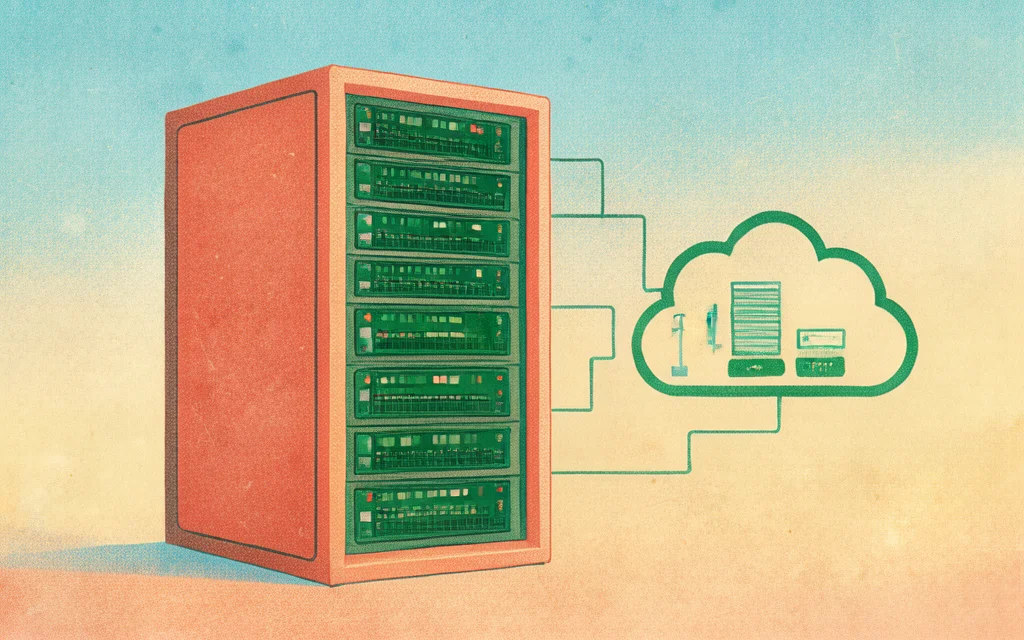
Our service operates as a cloud-based text-to-speech API, delivering audio files via standard HTTP requests. The infrastructure is designed for simplicity, allowing developers to integrate synthesis directly into their applications without managing complex backend systems or dedicated servers.
Cloud-based API endpoint
All synthesis requests are processed through our cloud infrastructure, ensuring consistent performance across different geographic regions. The system handles character splitting and queue management automatically, so you can send up to 4096 characters per request and receive the resulting audio file via a standard HTTP response.
Standard HTTP request/response model
We use a straightforward JSON request structure compatible with the OpenAI speech endpoint format. You send a POST request to https://api.play55kk.com/v1/audio/speech with your parameters, and receive the audio file in your chosen format. This standard approach ensures easy integration with existing tools and libraries.
- JSON body with
model,input,voice,response_format, andspeedparameters - Supports mp3, wav, opus, flac, and pcm output formats
- Standard HTTP status codes indicate success or failure
No proprietary SDK required
We do not provide a proprietary SDK, eliminating the need for additional dependencies or version updates. You can use the official OpenAI SDKs by simply changing the base_url to our API endpoint, or send raw HTTP requests using any standard library. This gives you full control over your integration stack.
Support and Contact

Our support channel is email-only. You can reach the team at any time to ask questions about the API, pricing, or integration details. This single channel keeps communication clear and direct, without the complexity of multiple support portals.
Support via email only
We handle all inquiries through email. This ensures that every message is received and addressed systematically. There are no automated queues or IVR systems to navigate; you communicate directly with the support team via a standard email address.
No live chat or phone support
We do not offer live chat widgets or phone support. This aligns with our independent, lightweight structure. By avoiding real-time support channels, we maintain a straightforward operational model focused on the API itself rather than customer service infrastructure.
Response time depends on volume
Response times are not guaranteed by an SLA. We process emails as they arrive, so your wait time may vary depending on the current volume of support requests. During high-traffic periods, responses may take longer than usual.

Product Limitations

Our API delivers audio files synchronously. While generation typically matches real-time speed, the response contains the complete file. There is no streaming or WebSocket support, meaning you cannot receive partial audio chunks while synthesis is in progress. The file is returned in the response body, not via a separate download link.
No streaming or WebSocket support
Requests are processed sequentially. Under load, a request may wait in a queue. You receive the full audio file only after synthesis completes. This model is reliable for batch processing but does not support low-latency streaming scenarios.
No SSML or custom lexicons
We do not support Speech Synthesis Markup Language (SSML). There are no phoneme dictionaries or custom pronunciation lexicons available. You control pacing and emphasis only through the speed parameter (0.25–4.0). Complex formatting requires pre-processing your text.
No voice cloning or emotion tags
We offer eight fixed presets. There is no custom voice cloning, so you cannot upload your own voice. We do not provide emotion tags or voice design tools. Each voice is based on licensed recordings from LibriVox public-domain audiobooks.
Listen to the 8 voices
Each sample below was generated by this API from the same sentence. indie developers can build rapid prototypes to validate startup ideas without needing large teams or significant funding.


23 languages
Any voice speaks any of these languages.